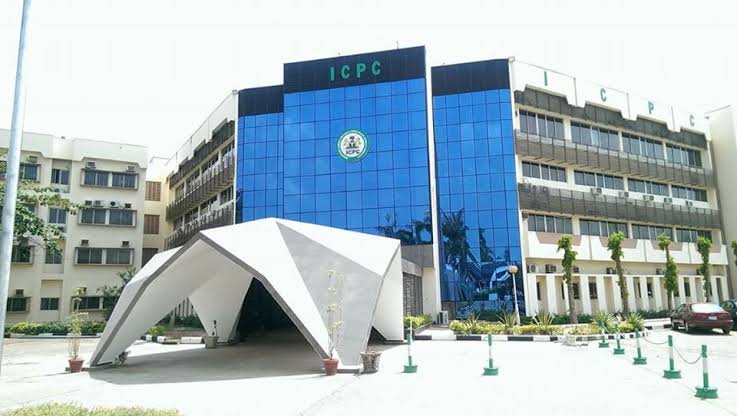
Court Dismisses Ex-Lawmakers’ Suit Against ICPC
The Independent Corrupt Practices and Other Related Offences Commission (ICPC) has recorded a major legal victory at the Federal High Court sitting in Umuahia, Abia State, following the dismissal of two suits filed by former Abia lawmakers seeking to halt investigations into their activities while in office.
The suits were instituted by former members of the Abia State House of Assembly, Hon. Kalu Chikwendu and Hon. Apugo Chukwudi J., who had approached the court to restrain the anti-graft agency from inviting them over a petition bordering on alleged corruption-related matters.
In the separate cases — marked FHC/UM/CS/108/2025 and FHC/UM/CS/109/2025 — the ex-lawmakers challenged the constitutionality of Section 28 of the Corrupt Practices and Other Related Offences Act, 2000. They argued that the provision under which they were invited by the Commission was inconsistent with Sections 35 and 36 of the 1999 Constitution (as amended), which guarantee personal liberty and fair hearing.
However, in a firm ruling delivered on Friday, the Federal High Court dismissed their claims, affirming that the ICPC possesses clear statutory authority to investigate corruption and related offences.
The court held that Section 28 of the ICPC Act does not conflict with constitutional provisions and declared that the suits amounted to an attempt to use the judicial process to shield the plaintiffs from lawful investigation.
Justice further ruled that granting the reliefs sought by the former lawmakers would effectively provide judicial cover against the legitimate exercise of the Commission’s mandate.
Describing the suits as mala fide, the court not only refused all the reliefs sought but also awarded ₦500,000 in costs against each of the plaintiffs.
The judgment has now cleared the path for the ICPC to proceed with its investigation of the former lawmakers, signaling a significant setback in their bid to block the anti-corruption probe.