Ibani’s Abraka Campaign Gains Ground as 2027 Race Heats Up
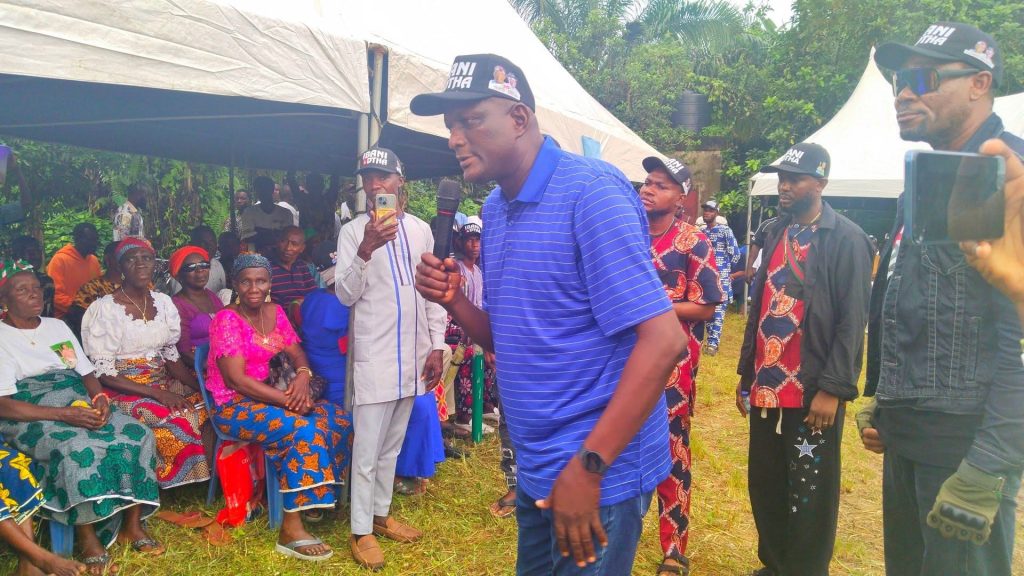
The campaign of Hon. Felix Ejovwoke Erhimedafe, popularly known as Ibani, the All Progressives Congress (APC) candidate for the restored Abraka State Constituency, is increasingly taking shape, with grassroots mobilisation, youth engagement and party stakeholder consultations emerging as key features of his political activities ahead of the 2027 Delta State House of Assembly election.
From community engagements in Abraka to strategic meetings involving APC leaders across Ethiope East Local Government Area, reports from the candidate’s support groups point to an emerging campaign narrative built around political experience, party unity, grassroots participation and the call for inclusive representation.
The latest of these activities was the September 20, 2026, gathering in Erho-Abraka, where the Erhimedafe Youth Movement, Ward 2 Chapter, led by Mr Daniel Enatu, popularly known as Young Money, hosted the APC candidate.
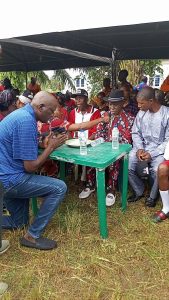
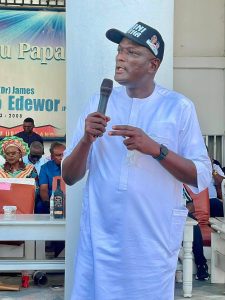
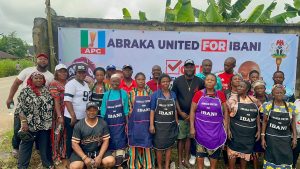


The event, according to the movement, attracted enthusiastic youth participation, with members reaffirming their support for Ibani and APC candidates across Ethiope East and Delta State.
The gathering represents another effort by the candidate’s support network to strengthen its presence at the community level, particularly among young people, whose participation will be an important feature of the 2027 electoral process.
For Ibani, the Erho engagement offers an opportunity to deepen his relationship with grassroots political structures and reinforce his campaign’s message of inclusion.
However, while the movement described the event as a strong show of support, the extent to which such gatherings translate into broader voter participation across the constituency remains to be seen.
Party Unity and Stakeholder Mobilisation
Beyond the grassroots engagements in Abraka, the Ibani campaign is also placing emphasis on consolidating the APC structure across Ethiope East.
A recent stakeholders’ meeting at the Eku residence of a prominent APC leader brought together party leaders, stakeholders and members in what organisers described as an effort to strengthen the party ahead of the 2027 elections.
The gathering reportedly focused on motivating party faithful and expanding the party’s mobilisation network, with a call on stakeholders to bring more people into the APC fold.
Ibani was said to have reinforced the message, declaring that no son or daughter of Abraka should be left behind.
His appeal to Abraka people at home and in the diaspora to join the campaign reflects an effort to broaden participation beyond existing party structures.
The Eku meeting also highlights the importance the campaign attaches to political coordination across Ethiope East, where party structures and relationships could play a role in shaping the constituency contest.
Yet, the call for unity presents a task beyond gathering party leaders. Its practical value will depend on how effectively the campaign translates stakeholder commitments into sustained engagement with communities and voters across the three wards of the restored constituency.
Political Experience at the Centre of Ibani’s Profile
A recurring feature of Ibani’s public profile is his political experience and involvement in party administration.
Erhimedafe previously served as councillor representing Ward 1, Abraka, from 2003 to 2006, and later served as chairman of the Peoples Democratic Party (PDP) in Ethiope East.
His political background has featured in public endorsements following his emergence as the APC candidate.
On August 24, 2026, Delta State Commissioner for Higher Education, Prof. Nyerhovwo Tonukari, congratulated Erhimedafe on securing the APC ticket and called for unity behind the party’s candidates.
Similarly, Olorogun Fred Latimore Oghenesivbe, in a September 1 statement, described Erhimedafe as a grassroots politician and experienced party administrator, while highlighting the importance of effective representation following the restoration of Abraka State Constituency.
These endorsements form part of the political context surrounding Ibani’s candidacy and reinforce the campaign’s emphasis on experience and party organisation.
For the electorate, however, the central question will be how that experience translates into legislative performance, effective representation and a practical response to the needs of Abraka.
Education and Public-Service Messaging
Ibani’s campaign activities have also featured engagements around education and existing government programmes.
On September 8, MO MEDIA HEADLINES reported that the APC candidate urged students and residents facing difficulties paying school fees to take advantage of the Nigerian Education Loan Fund (NELFUND), a federal government education financing initiative.
The appeal, made during an engagement with members of the Oko-Erhirie Quarter community in Abraka, brought an education-related issue into the campaign’s public messaging.
The engagement is significant in a constituency where educational access and student welfare are important concerns, particularly given the presence of Delta State University in Abraka.
By encouraging residents to explore NELFUND, Ibani connected a federal government programme with the concerns of local students and households.
Nevertheless, promoting an existing government initiative is different from presenting a constituency-specific legislative commitment. As the campaign develops, greater clarity on its proposed interventions in education, skills acquisition, youth development and student welfare would provide voters with a fuller understanding of its policy direction.
Issue-Based Politics and the Test of Credibility
Another defining element of Ibani’s campaign is his public call for peaceful and issue-based politics.
On September 9, MO MEDIA HEADLINES reported that Erhimedafe urged supporters to avoid personal attacks, inflammatory statements and divisive rhetoric, insisting that the campaign should focus on ideas, issues and practical solutions.
He also pledged to pursue people-centred representation and serve as a voice for vulnerable constituents, irrespective of political affiliation or social background.
The declaration establishes a public commitment against which the conduct and messaging of the campaign can be assessed as electioneering progresses.
It also provides an opportunity for the candidate to place constituency development and legislative priorities at the centre of public engagement.
Abraka residents face expectations around road infrastructure, healthcare, education, employment and broader community development. A campaign built around issues will need to explain how its candidate intends to pursue these concerns through legislation, oversight and constituency representation.
The effectiveness of the pledge will therefore depend not only on the language of the campaign but also on the substance and consistency of its public engagements.
Development Expectations and the Abraka Question
Ibani’s public-service background has also featured in reports concerning infrastructure and sanitation in Abraka.
Earlier in 2026, Erhimedafe was reported to have commended Governor Sheriff Oborevwori over approvals for road projects in Abraka and developments involving Delta State University.
Separate reports also identified his involvement in waste management activities in the area through the Delta State Waste Management Board.
These activities form part of the public record surrounding his political profile and provide context for his relationship with governance and community development.
However, Abraka’s development expectations extend beyond political endorsements and the acknowledgement of government projects.
The restored constituency presents an opportunity for its representative to articulate the interests of its communities through legislative advocacy, oversight and sustained engagement with relevant authorities.
For Ibani, the challenge will be to demonstrate how his experience and political relationships can be translated into measurable benefits for the constituency.
The Road Ahead
The available campaign reports suggest that Ibani’s political activities are currently defined by four broad themes: grassroots mobilisation, party consolidation, political experience and issue-based messaging.
The Erho-Abraka youth gathering and the Eku stakeholders’ meeting provide fresh examples of efforts to build and reinforce his support network. Earlier engagements around NELFUND and peaceful campaigning have added education and political conduct to the campaign’s public narrative.
These activities indicate an organised effort to establish visibility and maintain contact with political and community structures ahead of the 2027 election.
Nevertheless, the reports of support from campaign movements should not be mistaken for an independent measure of voter preference across Abraka. The scale of the candidate’s support, the reach of his mobilisation structures and the response of voters across the constituency remain matters for further observation.
As the election approaches, the campaign’s next phase will be important in determining how its mobilisation efforts are matched by a detailed legislative agenda and a clear response to the development expectations of the people.
For a constituency whose restoration has renewed expectations of representation, the 2027 contest will involve more than party structures and political endorsements. It will also place candidates before an electorate seeking answers on development, accountability and effective representation.
For Ibani, the emerging campaign presents an opportunity to build on his grassroots engagements and political experience. The defining test ahead will be how convincingly he connects that foundation to the aspirations and everyday concerns of Abraka people.