Nigeria Trains 100 Experts For Anti-Money Laundering Assessment
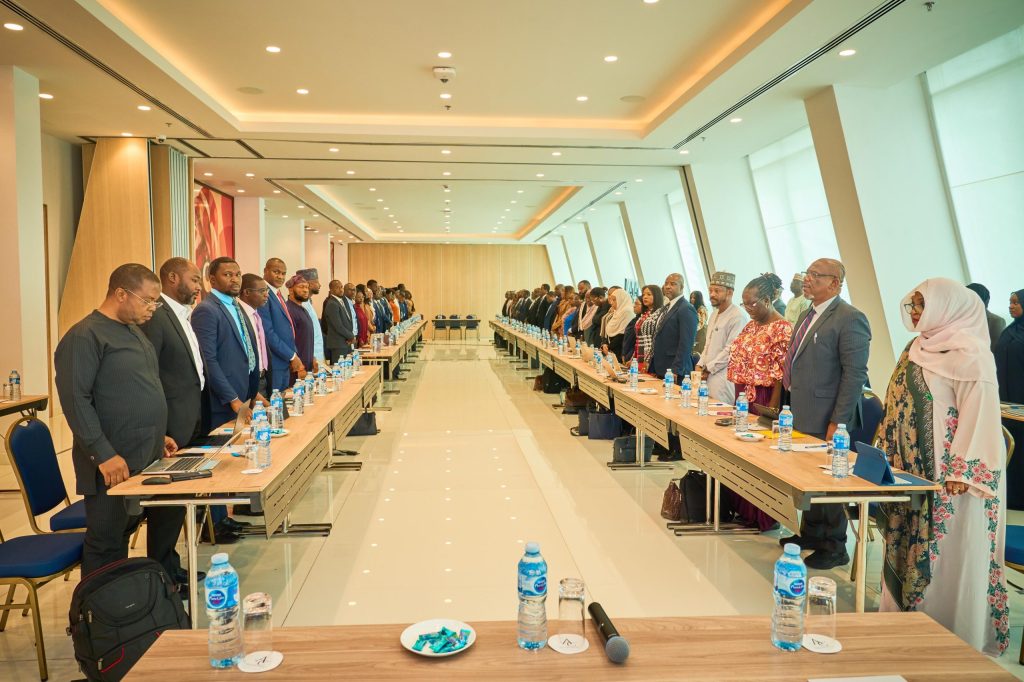
The Nigerian Financial Intelligence Unit (NFIU), in collaboration with the Inter-Governmental Action Group against Money Laundering in West Africa (GIABA) and SecFIN Africa, has commenced a five-day capacity-building programme for 100 experts drawn from key government institutions to strengthen Nigeria’s preparedness for its forthcoming third-round Mutual Evaluation on anti-money laundering and counter-terrorism financing.
The training, which is holding in Abuja from October 12 to 16, 2026, is designed to deepen participants’ understanding of international assessment standards, improve inter-agency coordination and prepare the country for a national Mock Mutual Evaluation Exercise scheduled for November 2026.
The initiative is part of Nigeria’s broader efforts to strengthen its anti-money laundering, counter-financing of terrorism and counter-proliferation financing (AML/CFT/CPF) framework and demonstrate measurable results in the fight against financial crimes.
Speaking at the opening of the programme, the Chief Executive Officer of the NFIU, Hafsat Abubakar Bakari, said Nigeria must be prepared to demonstrate not only the strength of its laws and institutional structures but also their effectiveness in practice.
Bakari noted that the training builds on Nigeria’s successful exit from the Financial Action Task Force (FATF) Grey List in October 2025, stressing that sustained institutional cooperation and verifiable results remain critical to protecting the integrity of the country’s financial system.
According to her, the objective is to translate collective institutional efforts into measurable improvements in detecting and disrupting financial crimes.
Representing the Director-General of GIABA, the organisation’s Director of Evaluations and Compliance, Giwa Siman Sechap, emphasised that mutual evaluation requires a coordinated national effort supported by credible evidence of implementation.
Sechap explained that beyond demonstrating technical compliance with international standards, Nigeria must establish that its institutions are effectively implementing the laws, policies and procedures designed to combat money laundering and related financial crimes.
He described the training as an opportunity to strengthen participants’ knowledge, coordination and practical readiness ahead of the forthcoming assessment.
Similarly, SecFIN Africa’s Country Representative, Professor Shehu Abdullahi, underscored the importance of sustained capacity development, reliable information-sharing and collective ownership of national priorities.
Abdullahi said effective preparation depends on institutions working together to identify gaps, consolidate existing progress and demonstrate the practical effectiveness of Nigeria’s financial integrity framework.
The programme brings together representatives of more than 20 government agencies and institutions whose responsibilities cover financial regulation, intelligence gathering, law enforcement, prosecution, revenue administration and national security.
Participating institutions include the Central Bank of Nigeria (CBN), Economic and Financial Crimes Commission (EFCC), Department of State Services (DSS), Independent Corrupt Practices and Other Related Offences Commission (ICPC), Federal Ministry of Justice, Nigerian Police Force, Nigeria Customs Service, Nigeria Revenue Service and the Nigerian Financial Intelligence Unit.
Others are the Securities and Exchange Commission (SEC), National Insurance Commission (NAICOM), Corporate Affairs Commission (CAC), Bureau of Public Procurement (BPP), National Drug Law Enforcement Agency (NDLEA), National Agency for the Prohibition of Trafficking in Persons (NAPTIP), National Counter Terrorism Centre (NCTC), Defence Intelligence Agency (DIA), Special Control Unit Against Money Laundering (SCUML) and Nigeria Extractive Industries Transparency Initiative (NEITI), among other relevant bodies.
The participating institutions are expected to contribute their expertise in financial intelligence, regulatory supervision, suspicious transaction reporting, investigations, prosecutions, asset recovery, border control, beneficial ownership transparency, revenue enforcement and national security.
The training curriculum covers critical areas, including financial intelligence, regulatory supervision, virtual assets, beneficial ownership, investigations and prosecutions, asset confiscation, international cooperation, targeted financial sanctions and proliferation financing risks.
Participants will also undertake practical exercises and simulated assessment interviews to improve their ability to respond to evaluators’ questions with accurate information and verifiable evidence of institutional performance.
As part of its capacity-development strategy, Nigeria has expanded its pool of accredited global experts on FATF standards from fewer than 10 to 25 over the past two years.
The current programme forms part of a wider plan to train additional cohorts of between 100 and 150 participants quarterly, with a possible extension to private-sector stakeholders in subsequent phases.
The exercise also builds on a national stocktake and gap analysis coordinated by the NFIU, with support from the EFCC, DSS, ICPC, CBN, NAICOM and SEC through the Inter-Ministerial Committee.
The assessment is intended to identify institutional strengths, outstanding gaps and areas requiring corrective action, while providing a common basis for improving Nigeria’s overall AML/CFT/CPF regime.
The NFIU chief executive maintained that the ultimate measure of success would be the improvements achieved through stronger collaboration, clearer institutional responsibilities and demonstrable results in preventing and combating financial crimes.
The initiative highlights Nigeria’s continued efforts to strengthen institutional capacity and inter-agency cooperation ahead of its next mutual evaluation, with the November mock exercise expected to provide an opportunity to test the country’s level of preparedness.