CUPP Raises Concerns As Tinubu Prepares To Present ₦54.4trn 2026 Budget
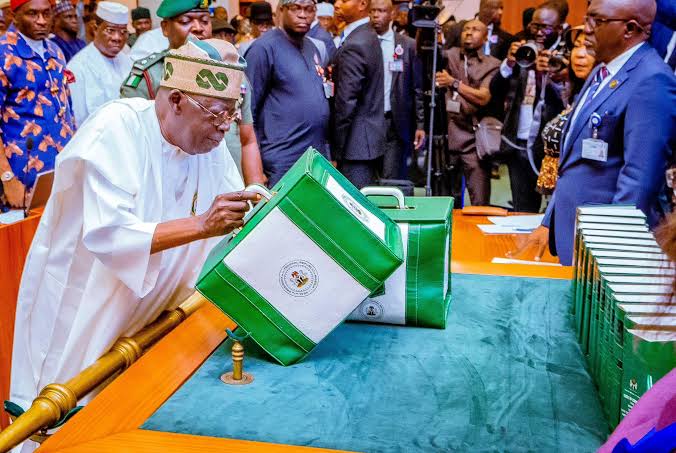
AS President Bola Tinubu prepares to present the 2026 Appropriation Bill, estimated at ₦54.4 trillion, to the National Assembly today (Friday, 19 December 2025), the Coalition of United Political Parties (CUPP) has expressed concerns over transparency, budget implementation and fiscal sustainability under the current administration.
In a statement issued on Friday and signed by its National Secretary, High Chief Peter Ameh, the coalition said public confidence in the federal budgeting process has continued to decline, citing what it described as persistent gaps between budget projections and actual outcomes.
The CUPP noted that despite major fiscal reforms, including the removal of fuel subsidy, which was expected to ease pressure on national revenue, the country has continued to experience increased borrowing, rising debt servicing costs and limited improvement in infrastructure, security and economic welfare.
A key issue raised by the group is the alleged lack of accountability in the implementation of the 2025 budget. According to the statement, the Budget Office of the Federation has yet to publish a comprehensive budget implementation report for 2025, marking the first time in about 15 years that quarterly performance reports have not been made public.
“The absence of these reports raises questions about compliance with fiscal responsibility laws and makes it difficult to assess the performance of existing budgets before new ones are introduced,” the coalition stated.
The CUPP also criticised the continuation of overlapping budget cycles, noting that capital components of the 2024 budget were extended into 2025 while new spending plans were introduced. It said this practice has contributed to delays in project execution, rollover of capital projects and increased dependence on borrowing to fund deficits.
Referencing past budget trends, the coalition observed that recurrent expenditure, including salaries and overheads, often records high levels of implementation, while capital expenditure for roads, schools, hospitals and power projects frequently falls short due to delays, revenue constraints and other challenges.
The statement further highlighted what it described as conflicting public disclosures on revenue performance. While the President earlier indicated that revenue targets had been met, subsequent official figures revealed a significant shortfall.
On the oil sector, the CUPP said crude oil production in 2025 averaged between 1.4 and 1.5 million barrels per day, below the 2 million barrels per day target, despite reported heavy spending on pipeline protection and security. It added that oil theft remains a major concern.
The Nigerian National Petroleum Company Limited (NNPCL) was also mentioned, with the coalition referring to audited financial statements that reportedly showed high expenditure on security-related items and other costs, at a time when national debt continues to rise.
Nigeria’s public debt, according to the group, is now estimated at over ₦150 trillion, with debt servicing consuming a large portion of government revenue. It noted that despite increased taxes and subsidy removal, economic pressures such as hunger, unemployment and infrastructure deficits persist.
The CUPP also faulted the National Assembly for what it described as weak oversight, arguing that insufficient scrutiny of budget performance has contributed to declining public trust.
The CUPP also faulted the National Assembly for what it described as weak oversight, arguing that insufficient scrutiny of budget performance has contributed to declining public trust.
The concerns come amid official confirmation of revenue challenges. Finance Minister Wale Edun recently disclosed that while the federal government projected about ₦40.8 trillion in revenue to fund the approximately ₦54.9 trillion 2025 budget, actual inflows are now estimated at around ₦10.7 trillion, representing a shortfall of about ₦30 trillion. The gap has been attributed largely to weak oil and gas earnings and underperformance in other revenue sources, leading to the rollover of several capital projects into 2026.
The CUPP said the presentation of the 2026 budget should be accompanied by full disclosure of the 2025 budget performance, independent audits of major expenditures and stronger commitment to transparency.
“Public confidence in government budgeting is at a low point, and restoring trust will depend on openness, accountability and measurable results,” the statement added.