Politics in the house of God: Adeyanju, Obi and the dangerous road to 2027
By MO Media Headlines
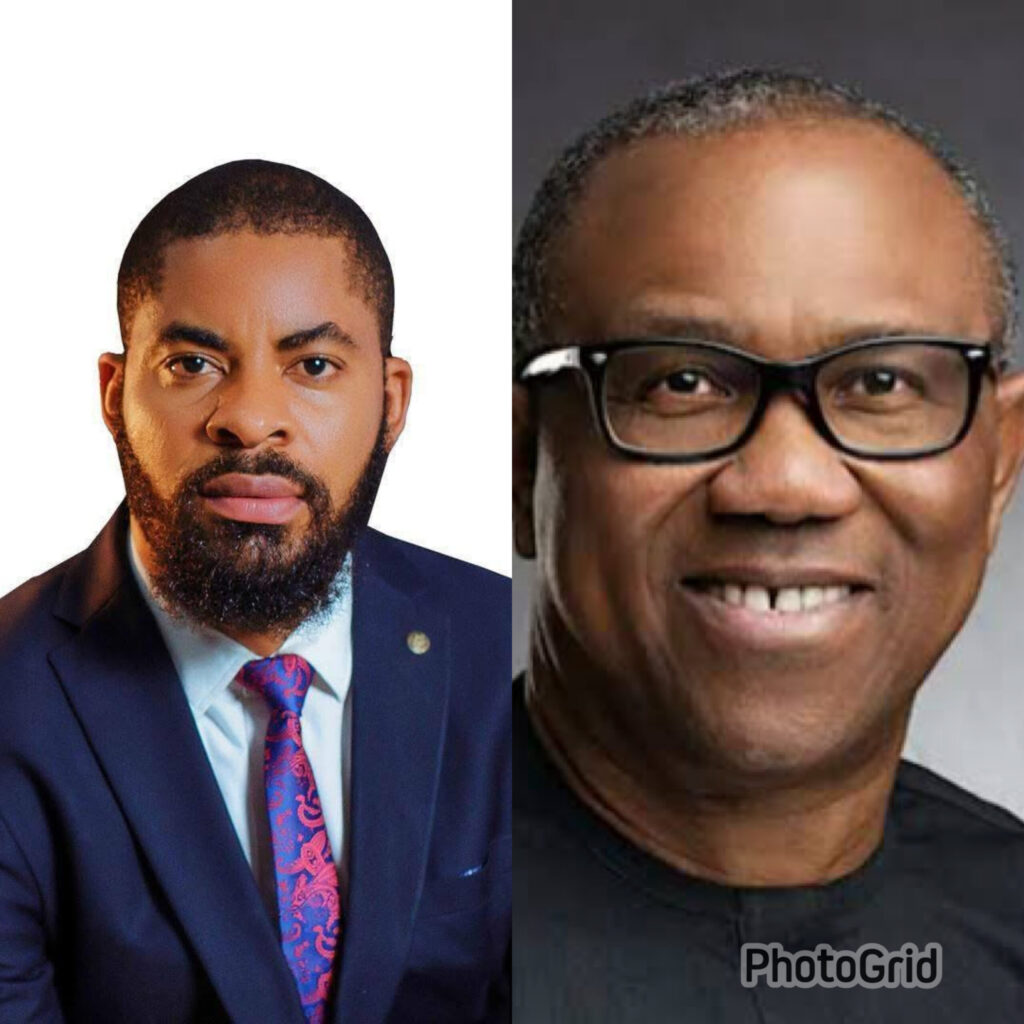
As Nigeria gradually moves into another politically charged electoral season, a fresh debate over the place of religion in politics has emerged, with human rights lawyer and public affairs commentator, Deji Adeyanju, warning political actors against turning churches and other religious institutions into instruments of electoral mobilisation.
Adeyanju’s latest intervention is particularly directed at former Anambra State Governor and presidential candidate of the Nigeria Democratic Congress (NDC), Peter Obi, whose recent appearance at a church service in Abuja has triggered renewed debate over the relationship between his political movement and Christian religious institutions.
The lawyer argues that Nigeria cannot afford a repeat of what he described as the religiously polarising tendencies witnessed during the 2023 presidential election.
His position, however, has generated a broader question that goes beyond Obi: where should Nigeria draw the line between a politician participating in religious life like any other citizen and using a religious platform for political mobilisation?
Adeyanju’s warning
In a statement circulated on Tuesday, Adeyanju insisted that electoral contests should be about ideas, policies, programmes and competing visions for the country rather than religious identity.
“Elections should be about ideas, policies and competing visions for Nigeria,” he argued, warning that religion and politics should not become instruments of division.
According to him, churches should not be transformed into campaign grounds or platforms where politicians seek religious endorsements.
“The church is not a place for political campaigns or political gimmicks, and politicians are not pastors. Pastors and religious leaders should stop giving politicians platforms to campaign or seek endorsements in church,” he said.
Adeyanju equally extended his criticism to religious leaders, maintaining that pastors and other clerics have a responsibility to protect the sanctity and independence of their institutions by refusing to allow politicians to exploit their pulpits for electoral purposes.
His argument is not simply about Peter Obi. He also condemned the reported gathering of religious clerics by a governor for the purpose of endorsing President Bola Ahmed Tinubu, making clear that, in his view, the principle should apply regardless of the political party or candidate involved.
What the Electoral Act 2026 says
Adeyanju’s argument also has a significant legal dimension.
Nigeria’s Electoral Act 2026, which came into force after presidential assent on February 18, 2026, contains explicit provisions regulating political conduct in relation to religion.
Section 96(3) provides that places designated for religious worship, police stations and public offices shall not be used for political campaigns, rallies or processions, or to promote, propagate or attack political parties, candidates or their programmes or ideologies.
The same section also prohibits political campaigns or slogans containing abusive language capable of injuring religious, ethnic, tribal or sectional feelings.
More significantly, Section 101 provides that a candidate, person or association that engages in campaigning or broadcasting based on religious, tribal or sectional reasons for the purpose of promoting or opposing a political party or candidate commits an offence. The provision prescribes fines and possible imprisonment upon conviction.
That legal framework gives fresh weight to the debate over politicians appearing in religious settings during the election season.
The question, however, is whether every political appearance at a church constitutes political campaigning.
That distinction is likely to become increasingly important as the 2027 election approaches.
Why Obi’s latest church appearance has attracted attention
Adeyanju’s criticism followed Peter Obi’s attendance at a Sunday worship service at Koinonia Global in Abuja, where he was acknowledged by Apostle Joshua Selman, founder of Eternity Network International.
Reports indicate that Obi spoke during the service and asked Nigerians to pray for politicians, particularly that public officials would stop stealing public funds.
Obi reportedly told the congregation that politicians were responsible for many of Nigeria’s problems and urged Nigerians to pray for politicians rather than judging them according to political affiliation.
His appearance therefore raises two competing interpretations.
To Obi’s supporters, appearing in a church, speaking about national development and asking for prayers does not necessarily amount to campaigning. Politicians, like other citizens, have religious affiliations and can participate in worship.
To Adeyanju and other critics, however, the timing and political context matter. With the country moving toward the 2027 elections, repeated appearances by presidential aspirants in major religious institutions can easily become a form of political networking and mobilisation, particularly where the politician receives public recognition or addresses a congregation.
That distinction is at the heart of the current controversy.
This is not Adeyanju’s first criticism of Obi
Adeyanju’s latest comments are not an isolated attack on Peter Obi’s political strategy.
The lawyer had raised similar concerns during the build-up to the 2023 presidential election.
In August 2022, Adeyanju criticised Obi’s visits to churches, arguing that the Labour Party presidential candidate should concentrate on building political structures across Nigeria’s 774 local government areas rather than treating churches as political structures.
At the time, Obi had visited several prominent Christian institutions, including the Dunamis International Gospel Centre, the Redeemed Christian Church of God and other churches.
Adeyanju described Obi’s church strategy as a poor substitute for grassroots political organisation.
By February 2023, his criticism had become even more explicit.
Adeyanju accused Obi of contributing to the religiousisation of the presidential contest, arguing that the movement from church to church and the use of pastors and religious personalities for political support could provoke a dangerous counter-reaction from Muslim communities.
He said at the time that he condemned the use of religion for politics irrespective of whether it was being done by Christian or Muslim leaders.
His concern was that once one side began using religion as a political instrument, other religious groups would inevitably respond in kind.
The subsequent political environment appeared to reinforce the argument that religion had become one of the defining narratives of the 2023 election.
The 2023 religious fault line
The 2023 presidential election was fought against the backdrop of intense religious and identity politics.
The emergence of the APC’s Muslim-Muslim ticket generated considerable controversy, particularly among Christian groups and political opponents.
At the same time, Obi’s strong support in predominantly Christian parts of southern Nigeria, particularly the South-East and parts of the South-South, became a major feature of the election.
His campaign was also accompanied by strong support from sections of the Christian community.
Critics subsequently argued that the contest increasingly acquired a religious character, while Obi’s supporters countered that his appeal was fundamentally based on competence, youth mobilisation, economic reform and dissatisfaction with the political establishment.
The debate remains contested.
What is less controversial, however, is that religious identity became deeply embedded in public conversations around the election.
Adeyanju now fears that the country could be heading toward a repetition of that experience.
“At what cost?”
In his latest intervention, Adeyanju framed the issue as one of national unity rather than merely an argument against one politician.
“At what cost will it be when we continue to divide ourselves along religious lines using the weapon of politics? At what cost?” he asked.
His warning is that politicians may gain short-term electoral advantages from religious mobilisation but leave the country with deeper social divisions after elections are over.
“The bad precedent set in 2023 should not be repeated, let alone worsened,” he said.
That argument deserves attention beyond the immediate Obi-Adeyanju controversy.
Nigeria is a deeply plural society, with substantial Muslim and Christian populations alongside adherents of traditional and other faiths. Political mobilisation around religious identity therefore carries consequences that can extend well beyond the ballot box.
When politicians convince voters that political competition is fundamentally a struggle between religious groups, policy discussions can easily disappear beneath identity politics.
Adeyanju also targets Tinubu’s camp
Adeyanju’s criticism is not entirely one-sided. He also condemned the reported gathering of religious clerics by a governor to endorse President Tinubu.
That point is important because it places his argument within a broader principle: religious politics should be condemned regardless of who deploys it.
If a politician aligned with the opposition uses churches for mobilisation, the practice should be questioned.
If a governor or ruling-party politician mobilises clerics to endorse the incumbent president, the same standard should apply.
This is consistent with Adeyanju’s stated position that the use of religion for political purposes is unacceptable whether it favours a Christian or Muslim candidate.
The challenge for Nigerian democracy is therefore not merely Peter Obi’s relationship with churches. It is the growing temptation among politicians across party lines to convert religious influence into electoral capital.
The church’s responsibility
Adeyanju has placed considerable responsibility on pastors and religious leaders.
“Pastors must desist from platforming politicians if they are to retain their respect and keep the house of God sacred,” he said.
His argument is that the church loses something when the pulpit becomes an extension of the political arena.
Religious leaders, however, face a difficult balancing act.
Politicians are members of society and, in many cases, members of religious congregations. Preventing them from attending worship services altogether would arguably go too far.
The more difficult question is what happens when attendance evolves into political messaging, endorsement, fundraising, campaign mobilisation or the use of a religious audience to promote a candidate.
That is precisely the line the Electoral Act 2026 seeks to regulate.
A law that could test political actors in 2027
The Electoral Act 2026 makes the issue more consequential than it was during previous election cycles.
Section 96 does not merely discourage the use of religious spaces for politics; it expressly prohibits their use for political campaigns, rallies and processions and for promoting or attacking political parties or candidates.
Section 101 goes further by criminalising campaigning or broadcasting based on religious, tribal or sectional reasons for the purpose of promoting or opposing a political party or candidate.
The law therefore provides a framework for INEC, security agencies and other relevant institutions to address conduct that crosses the boundary into prohibited campaigning.
But enforcement will be critical.
A law can prohibit political activity in places of worship, but determining whether a politician’s appearance at a church service was ordinary religious participation or political mobilisation can be complicated.
The circumstances, speech, publicity, endorsement, organisation and purpose surrounding the appearance may become relevant.
Obi’s stated position
There is also an apparent tension between Adeyanju’s interpretation of Obi’s political strategy and Obi’s own recent public position.
In August 2026, Obi said his 2027 campaign would be issue-based and devoid of ethnicity and religion.
He described the election as an opportunity for Nigerians to examine the records, ideas and plans of those seeking political office. That position appears, at least in principle, to be consistent with Adeyanju’s demand for issue-based politics.
The controversy is therefore not necessarily about what Obi says his campaign stands for, but whether his political actions and engagements with religious institutions reinforce or undermine that declaration. That is a question that voters, civil society organisations, religious leaders and election regulators will ultimately have to examine.
Beyond Obi and Adeyanju
The current dispute should not become another episode of partisan name-calling.
Adeyanju is a vocal critic of Obi, and his disagreements with the former Anambra governor predate this latest controversy. He has previously criticised Obi’s political relevance, campaign strategy and public statements. In 2025, he even stated publicly that he would vote for President Tinubu if the opposition presented Obi as its presidential candidate.
That history means Obi’s supporters are likely to view the latest intervention through the lens of Adeyanju’s longstanding criticism.
But dismissing the argument simply because of the messenger would miss the larger issue.
Nigeria needs a serious conversation about the boundaries between faith and politics.
Politicians need religious communities.
Religious communities also have legitimate political interests and are entitled to participate in democracy. But neither side should turn religious identity into a weapon for political mobilisation.
The real test for 2027
The real test will be whether Nigeria’s political class can campaign across religious and ethnic boundaries without exploiting those identities.
A presidential candidate should be able to enter a church without being accused automatically of campaigning.
A Muslim candidate should be able to visit a mosque without being accused automatically of religious mobilisation.
A Christian leader should be able to discuss national issues without becoming an unofficial campaigner.
But once a place of worship becomes a venue for endorsing candidates, displaying campaign materials, soliciting votes or promoting a political party on religious grounds, the democratic and legal questions become considerably more serious.
That is the boundary Adeyanju is asking Nigerians to defend.
“All is not fair in politics”
Adeyanju concluded his intervention with a statement that goes to the heart of Nigeria’s political culture:
“All is not fair in politics. All is not fair in politics like President Tinubu wrongly said.”
The statement challenges the familiar political assumption that anything is permissible if it helps a candidate win.
It is a debate Nigeria will need to have before the 2027 election.
Winning an election is important in a democracy.
But how elections are won can be equally important to the survival of the democracy itself.
If religion becomes the principal currency of political mobilisation, Nigeria risks producing elections in which voters are encouraged to choose not on the basis of governance, competence and policy but according to the religious identity of the candidates.
And once that happens, the winner may inherit not only political power but a society even more divided than the one that went to the polls.
Adeyanju’s warning, therefore, is bigger than Peter Obi. It is a warning to Obi, Tinubu, Atiku, every other political aspirant, political party and every religious leader preparing for 2027:
Nigeria’s churches and mosques should remain places of worship, while elections should be fought on ideas, competence, accountability and competing visions for the future of the country.