₦20m Intervention: DSIEC Councillors Empower 600 Constituents in Abraka
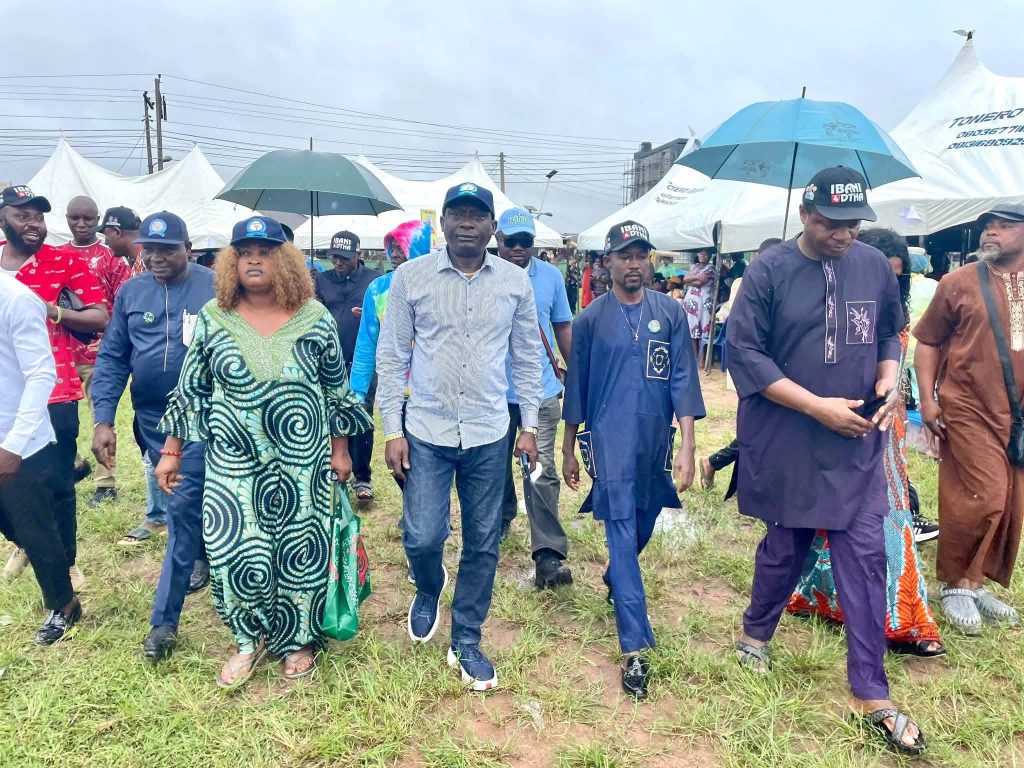
The reported ₦20 million financial intervention for councillors in Delta State has begun translating into direct grassroots support in Abraka, as councillors representing Diseac Wards 1, 2 and 3 in Ethiope East Local Government Area have empowered 600 constituents.
The empowerment programme, held on Monday at Ojeta Secondary School, Abraka, brought together beneficiaries from the three wards represented by Hon. Stanley Zuzu Iwhiwhu, Hon. Noble Council Ogboru and Hon. Chief Omamogho Elnathan Ese.
The programme marks the actualisation of an initiative earlier announced by the three councillors following reports that councillors across Delta State had received about ₦20 million each as part of a financial intervention arising from increased state revenues.
Before the event, Mo Media Headlines had reported that the three Delta state independent electorial commission (DSIEC) councillors were preparing to channel the reported intervention towards an empowerment programme for their constituents.
While reports by Delta Decides, Uptown Press and Track News had put the reported intervention at approximately ₦20 million per councillor, those reports were based on reported information and sources rather than an official government document publicly establishing the allocation. The DSIEC empowerment programme, however, has now provided a concrete grassroots component to the wider intervention being reported.
FROM REPORTED INTERVENTION TO GRASSROOTS EMPOWERMENT
The significance of Monday’s event goes beyond the distribution of support to 600 individuals.
At the ward level, councillors are among the elected representatives closest to residents. Consequently, the manner in which financial interventions involving local government representatives are deployed can have an immediate effect on communities.
In the case of DSIEC Wards 1, 2 and 3, the three councillors chose to organise a joint empowerment programme rather than have the reported intervention remain an issue discussed only at the political or administrative level.
The decision has therefore created a direct link between the reported government intervention and residents of the three Abraka wards.
For the beneficiaries, the immediate importance of the exercise is the opportunity to receive support that can potentially strengthen petty trading, small businesses, artisan activities and other sources of livelihood.
With 600 constituents benefiting from the programme, the exercise also represents a sizeable grassroots intervention within the three wards.
600 BENEFICIARIES AND THE QUESTION OF IMPACT
The number of beneficiaries is one of the most notable features of the programme.
Rather than measuring the intervention solely by the reported ₦20 million allocation, the outcome can also be examined through the number of people reached and what beneficiaries eventually do with the support received.
For an empowerment programme of this nature, the real test will ultimately be whether beneficiaries are able to use the assistance to improve their businesses, establish new income-generating activities, expand existing enterprises or meet specific economic needs.
The sustainability of such interventions will therefore depend not only on the distribution itself but also on follow-up, transparency and the ability of beneficiaries to convert the support into productive economic activity.
POLITICAL REPRESENTATION MEETS GRASSROOTS DEVELOPMENT
The programme also provides an interesting dimension to the debate about the role of councillors in local government administration.
Councillors are often primarily viewed through the prism of legislation, representation and ward-level political activities. However, when elected representatives become conduits for economic interventions, their performance can increasingly be assessed by the extent to which government programmes reach ordinary residents.
Monday’s exercise offered the three Diseac councillors an opportunity to demonstrate that ward representation can be connected directly to economic empowerment.
It also placed the councillors in the centre of a broader political conversation about the delivery of democratic dividends at the grassroots.
GOVERNMENT AND POLITICAL LEADERSHIP ACKNOWLEDGED
During the event, the three councillors expressed appreciation to Delta State Governor, Rt. Hon. Sheriff Oborevwori; Ethiope East Local Government Chairman, Hon. Chief Augustine Ogedegbe, JP; Deputy Speaker of the Delta State House of Assembly, Olorogun Barr. Arthur Akpowowo; Ethiope East APC Chairman, Hon. Chief Midwest Iboyitete, JP; and Okakuro Sunday E. Onoriode, JP, the Isio of Umiaghwa Abraka and Director of Protocol to the Delta State Governor.
Their acknowledgement indicates the political and administrative network within which the empowerment programme was organised.
The presence and remarks of political leaders at the event further underscored the importance attached to the initiative and its potential political and socioeconomic implications within Ethiope East.
The Ethiope East APC Chairman, Hon. Chief Midwest Iboyitete, described the exercise as a thing of joy and encouraged beneficiaries to make productive use of the opportunities provided.
Similarly, the Deputy Speaker of the Delta State House of Assembly, Olorogun Barr. Arthur Akpowowo, congratulated the councillors for the initiative and the beneficiaries, urging them to maximise the benefits of the empowerment.
Other personalities who spoke at the event included Hon. Felix Ejovwoke Erhimedafe, APC candidate for Abraka State Constituency; Chief Suru Salami; and Hon. Augustine Ogedegbe, JP.
THE ACCOUNTABILITY QUESTION
Although the successful empowerment of 600 constituents provides a tangible outcome, the programme also raises important questions that are relevant to public accountability.
The initial reports about the councillors’ financial intervention generated public interest because of the substantial sums reportedly allocated to individual councillors.
Consequently, beyond the political celebration surrounding the empowerment exercise, residents and stakeholders will naturally be interested in understanding the financial structure of the programme.
Questions relating to the total amount deployed, the value of the support received by each beneficiary, the selection process, the categories of beneficiaries and whether any balance remains from the reported intervention are all legitimate issues for public interest.
Such information would help residents properly assess the relationship between the reported allocation and the actual empowerment delivered.
This is particularly important because the original ₦20 million figure was reported by media organisations from sources, rather than established in the reports through a publicly available official government document.
A NEW TEST FOR GRASSROOTS REPRESENTATION
The DSIEC empowerment programme may therefore become an important reference point in assessing how local government interventions can be translated into practical benefits for residents.
The exercise has moved the conversation from what was initially a reported financial intervention to a measurable programme involving 600 beneficiaries.
However, the longer-term significance will depend on what happens after the ceremony.
If beneficiaries are able to use the support productively, the intervention could contribute to household income, small-business growth and economic activity within the three wards. If properly documented and followed up, it could also provide useful evidence of how ward-level empowerment programmes affect communities.
For the councillors, the programme creates both an opportunity and an obligation: an opportunity to demonstrate the value of grassroots representation, and an obligation to ensure that the intervention remains transparent and produces measurable benefits.
For the beneficiaries, the challenge is equally clear — to convert the support received into productive ventures capable of improving their livelihoods.
CONCLUSION
The empowerment of 600 constituents by the councillors representing Diseac Wards 1, 2 and 3 is a significant development in Abraka’s grassroots political and economic landscape.
What began as a reported ₦20 million intervention has now produced a visible programme involving hundreds of residents.
The exercise has also demonstrated that the impact of government interventions is ultimately measured at the community level — where citizens can see, receive and utilise the benefits.
As the beneficiaries return to their various businesses and economic activities, the real story of the DSIEC empowerment programme will be written not only by the event itself, but by the livelihoods it helps to strengthen and the economic opportunities it creates.
For Abraka residents, the key question going forward will be whether similar interventions can be sustained, expanded and subjected to sufficient transparency to ensure that public resources and government-supported programmes continue to translate into meaningful grassroots development.