Reps Demand Funding Boost for ICPC After N33bn Recovery
The House of Representatives has called for a major funding overhaul for the Independent Corrupt Practices and Other Related Offences Commission (ICPC) following its recovery of N33.16 billion, $1.8 million, and numerous assets despite operating on a N2.8 billion allocation.
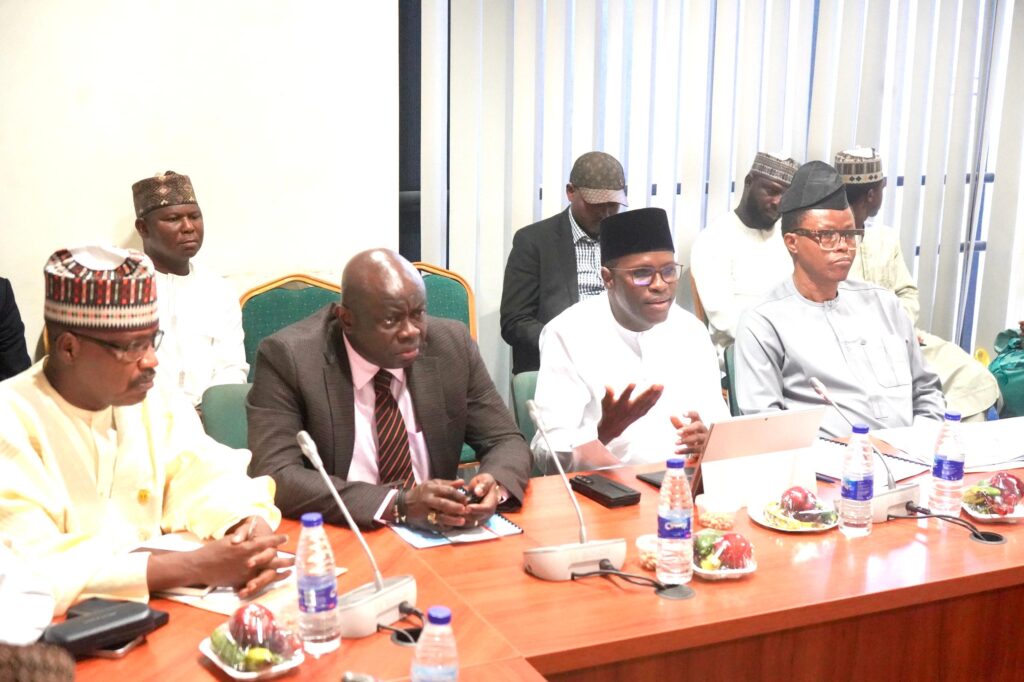
Lawmakers made the demand on Friday during the Commission’s defence of its 2026 budget proposal before the House Committee on Anti-Corruption, describing the ICPC’s performance as “exceptional” in the face of what they termed severe underfunding.
Members of the Committee questioned the rationale behind underfunding an anti-corruption agency with a statutory mandate to safeguard public resources, warning that inadequate funding could expose personnel to undue pressure and compromise ongoing investigations nationwide.
Rt. Hon. Kayode Akiolu commended the Commission and its Chairman for maintaining professional standards that align with international best practices, noting that the ICPC has sustained a firm foundation for purposeful law enforcement.
Hon. Abdulmaleek Abdulraheem, representing Adavi/Okehi Federal Constituency of Kogi State, highlighted the Commission’s return on investment.
“You only got N2.8 billion last year, yet you recovered N33.16 billion and $1.8 million alongside numerous convictions,” he said. “There are agencies that are heavily funded but return nothing to government coffers. Whatever was deducted from their 2026 budget should be refunded. If they cannot be given more than what was approved in 2025, they should not go below that figure.”
Other lawmakers proposed an amendment that would allow the ICPC to retain a percentage of recovered funds to support its operations, similar to arrangements enjoyed by agencies such as the Nigeria Customs Service and the Nigerian National Petroleum Company Limited (NNPC).
Earlier, ICPC Chairman, Dr. Musa Adamu Aliyu, SAN, disclosed that inadequate funding and poor release of approved allocations significantly hampered operations in 2025. Out of N7.82 billion approved for overhead, only N2.1 billion (28%) was released, while just N400.49 million (about 5%) of the N7.3 billion capital allocation was disbursed — and released as late as November 28, 2025.
He revealed that investigators and lawyers often had to deploy personal funds to attend court proceedings due to limited operational vehicles and logistical challenges. Several investigations were stalled, while payment difficulties affected rented state offices and service providers.
Despite these constraints, the Commission filed 72 cases, secured 36 convictions, and is currently prosecuting about 400 cases across courts nationwide. It also received 1,107 petitions, assigned 700 for investigation, and concluded 150 inquiries. Additionally, Ethics and Integrity Compliance Scorecards were deployed across 344 Ministries, Departments and Agencies (MDAs), and 131 Anti-Corruption and Transparency Units (ACTUs) were inaugurated.
Dr. Aliyu warned that the proposed 2026 budget — reduced from the Commission’s N25.8 billion proposal with cuts of N4.7 billion in overhead and N2.2 billion in capital expenditure — could further weaken operations if not urgently reviewed.
The House Committee assured the Commission of its support and pledged to push for improved funding, stressing that strengthening anti-corruption institutions remains critical to Nigeria’s governance and economic integrity.
The ICPC management team had earlier defended its 2026 proposal before the Senate Committee on Anti-Corruption, where assurances were also given to engage the Appropriation Committee for possible enhancement of the Commission’s funding.