Abraka Security Meeting: Where Were The Governor’s Security Aides?

The just-concluded stakeholders’ security meeting at the Abraka Police Division on Thursday, September 24, 2026, has raised important questions about government representation, security coordination and the commitment of political appointees to addressing growing security concerns in Abraka and Ethiope East Local Government Area of Delta State.
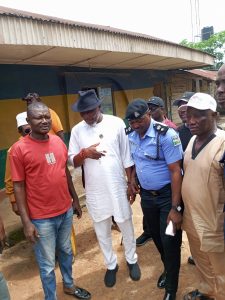
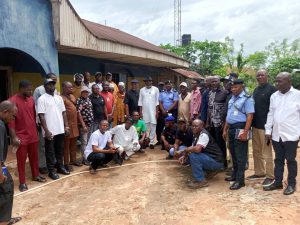
While the meeting brought together an array of community leaders, security personnel, political stakeholders, youth representatives and human rights advocates, the reported absence of government security appointees from Abraka has become a notable talking point.
The meeting, which commenced at exactly 12 noon, was convened to deliberate on the security challenges confronting Abraka and neighbouring communities, with participants resolving to adopt more coordinated and proactive measures to protect lives and property.
Among those present was the Deputy Speaker of the Delta State House of Assembly, Olorogun Chief Barr. Arthur Akpowowo, who was the highest-ranking political officeholder in attendance.
Absence Of Key Security Appointees Raises Questions
Despite the importance of the deliberations, Mo Media Headlines, which monitored the meeting, observed that some notable security appointees of the Delta State Governor from Abraka were not spotted at the venue.
They included the Senior Special Adviser to the Governor on Security, Hon. Anthony Edafiogho; the Special Assistant to the Governor on Security, Hon. John Enamuotor, popularly known as Atom, another security aide, Hon. Divine Azanama Eyewumi as well as Chief Ernest Nikoro (JP) Senior Special Assistant (SSA) on security to delta state government.
Their reported absence raises legitimate questions about the level of coordination between the state government’s security structure and community-level security stakeholders.
At a time when residents are seeking practical solutions to insecurity, the presence and active participation of government officials entrusted with security-related responsibilities could have strengthened the meeting’s connection to the state government’s policy direction, intelligence coordination and operational support.
While their absence does not automatically invalidate the resolutions reached, it does raise concerns about how effectively those resolutions will be communicated to, supported by and implemented in collaboration with the relevant government authorities.
A security meeting of this nature should not merely produce resolutions on paper. It should establish clear channels of communication, define responsibilities and secure the commitment of the institutions expected to translate its decisions into action.
Strong Resolutions, But Who Will Drive Implementation?
The communique contains several important proposals, including restrictions on night-time motorcycle movement, a crackdown on illicit drug dealers, screening of supporting security personnel and calls for more proactive security operations.
Stakeholders also appealed to the Executive Chairman of Ethiope East Local Government Area, Hon. Chief Augustine Ogedegbe, to provide operational vehicles for the Abraka Police Division and other security agencies.
These are significant demands that require more than community-level consensus. They require sustained engagement with the local and state governments, adequate funding, operational logistics and effective inter-agency collaboration.
The absence of the Governor’s security aides therefore underscores the need to strengthen the link between community security consultations and the government’s security machinery.
There is also a need for the organisers to clarify the communique’s reference to restrictions on night-time tricycle movement, while the accompanying resolution refers to motorcycles. Such details must be clearly communicated to avoid confusion among residents and transport operators.
A Call For Accountability, Not Political Blame
The absence of the security appointees should not be taken as proof of indifference or a lack of commitment to Abraka’s security. There may be scheduling conflicts or other official engagements that have not been made public.
However, given the importance of the meeting, the affected officials should clarify their absence and indicate how they intend to support the resolutions reached.
The security of Abraka and Ethiope East should transcend political affiliations, personalities and administrative boundaries. Community stakeholders have demonstrated their willingness to collaborate, and government representatives should be encouraged to sustain that engagement.
The Deputy Speaker’s presence and the participation of traditional rulers, security agencies, political representatives and community groups provide a foundation for collective action. The next step is to ensure that the resolutions receive the necessary institutional backing.
Ultimately, the success of Thursday’s meeting will not be measured by the number of dignitaries in attendance or the strength of its communique, but by whether residents experience improved safety, faster security responses and a measurable reduction in criminal activities.
Abraka needs more than security meetings. It needs sustained government engagement, practical support and visible results.
Mo Media Headlines calls on the relevant government security appointees to provide clarification on their absence and reaffirm their commitment to the collective security of Abraka and Ethiope East.