Olukoyede: Non-Compliance Fuels Corruption
The Executive Chairman of the Economic and Financial Crimes Commission (EFCC), Ola Olukoyede, has declared that widespread non-compliance with laws remains a major driver of corruption and poverty in Nigeria.
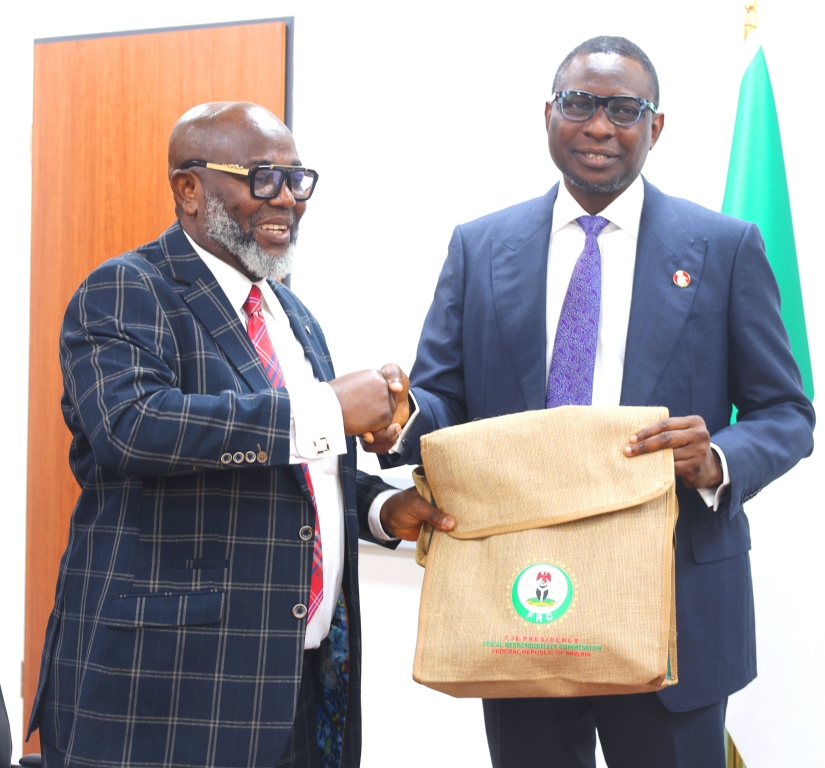
Olukoyede made the assertion on Thursday, February 19, 2026, when the Fiscal Responsibility Commission (FRC), led by its Chairman, Victor Chinemerem Muruako, signed a Memorandum of Understanding (MoU) with the EFCC at the Commission’s corporate headquarters in Jabi, Abuja.
According to the EFCC boss, Nigeria’s challenges are not rooted in a lack of resources but in poor adherence to established laws and weak enforcement mechanisms.
“One of our major challenges is compliance with laws. If our institutions, agencies and Nigerians comply with our laws even at 70 to 80 percent, Nigeria will not be where it is today because the resources are there,” Olukoyede said.
Drawing from his daily experiences in office, he stressed that the country has “no business with poverty,” arguing that failure to take laws, enforcement and compliance seriously has undermined national development.
The anti-graft chief described the MoU as a strategic step toward deepening inter-agency collaboration, particularly through the establishment of joint investigation teams. He noted that such synergy would bring the FRC to the forefront of the anti-corruption fight and help sanitize Nigeria’s public financial management system.
Olukoyede emphasized that enhanced cooperation between both agencies would strengthen oversight of Ministries, Departments and Agencies (MDAs), especially in the areas of budget implementation, procurement and contract processes.
“We want to see our budgetary processes tidied up. We want to see our procurement and contract processes tidied up as well and compliance with the laws,” he stated, adding that as much as 80 percent of public sector corruption could be prevented if procurement and contract procedures were strictly observed.
He further noted that visible collaboration between the EFCC and FRC would signal a decisive shift from past practices, stressing that the MoU must go beyond symbolism to full implementation. “It’s not just for us to sign an MoU, it’s important for us to operationalize it,” he said.
Olukoyede also referenced Nigeria’s recent removal from the grey list of the Financial Action Task Force (FATF), attributing the development to the sustained efforts of anti-corruption agencies in strengthening anti-money laundering and counter-terrorism financing frameworks.
In his remarks, FRC Chairman Victor Chinemerem Muruako praised the EFCC’s performance and described the agreement as a major boost to regulatory enforcement and anti-corruption efforts.
“I commend you and your team for working hard. I feel fulfilled that eventually this MoU is being signed today. It will help us know that we are really working with you one-on-one,” Muruako said.
He expressed confidence that the partnership would significantly weaken what he described as the “hydra-headed element” of corruption, assuring that the FRC is committed to fully supporting the collaboration.
The MoU is expected to facilitate information sharing, joint investigations and stronger monitoring of fiscal discipline across government institutions, reinforcing Nigeria’s ongoing fight against economic and financial crimes.